
How To Choose Commercial Flooring For High-Traffic Workspaces
Busy workplaces put flooring through far more than ordinary daily wear. Foot traffic, rolling carts, dropped items, spills, cleaning chemicals, and frequent maintenance can quickly expose a poor material choice. When planning commercial flooring, the goal is to select a surface that fits how the space actually operates, not simply how it should look on opening day.
The right floor can support safety, comfort, cleaning routines, acoustics, and a professional appearance. The wrong one may create avoidable repairs, recurring maintenance demands, or disruptive replacement work. A practical selection process weighs the building’s traffic, environmental conditions, equipment, and long-term operating needs.
Why Flooring Choice Matters In Busy Workspaces
Flooring is a working surface, not just an interior finish. It must handle the movement of employees, visitors, equipment, deliveries, and cleaning crews while remaining safe and presentable. Renovation activity and cost pressures also make careful material selection important, as recent commercial flooring conditions have increased attention on durability, installation timing, and life-cycle value.
Assess The Space Before Comparing Materials
Before reviewing samples, document what happens in each zone. A quiet office corridor, a restaurant entry, a restroom, and a loading area may all need different surfaces, even when they are part of the same building.
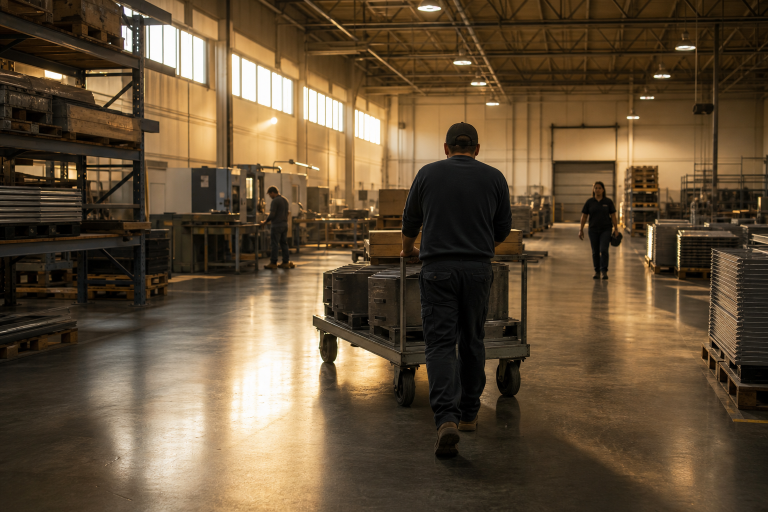
Industrial environments require an especially close look at rolling loads, vibration, impacts, oils, and production schedules. Facilities evaluating surfaces for plant areas should consider how manufacturing flooring needs can differ from those of offices, showrooms, or customer-facing spaces.
Questions To Ask First
- How many people, carts, or vehicles cross the area each day?
- Will the surface encounter water, grease, chemicals, or frequent wet cleaning?
- Are forklifts, pallet jacks, rolling chairs, or display racks involved?
- Does the space need noise control, cushioning, or fatigue reduction?
- Will sunlight, humidity, heat, or temperature swings affect the floor?
- How much installation downtime can the business reasonably accept?
Check Six Key Performance Factors
Durability
Review wear resistance, impact resistance, load capacity, and the manufacturer’s stated use limits. Terms such as “heavy duty” are broad, so technical data and real site conditions matter more than labels alone.
Slip Resistance
Entries, kitchens, restrooms, production areas, and wash-down zones deserve particular attention. Surface texture, contaminants, footwear, drainage, and cleaning products all affect traction. Federal regulations on walking-working surfaces also emphasize keeping work floors clean, dry where feasible, able to support intended loads, and free of hazards.
Moisture, Chemicals, And Cleaning
Concrete moisture, slab cracks, oils, cleaners, and disinfectants can affect both the floor and its installation system. Kitchens, healthcare settings, automotive spaces, laboratories, and warehouses should evaluate exposure before selecting a finish.
Comfort, Acoustics, And Appearance
Carpet tile and rubber can reduce sound or provide a softer feel underfoot. Hard surfaces may simplify cleaning and help with rolling traffic. Color, pattern, gloss, and repair options also influence how well a floor continues to look maintained.
Compare Common Commercial Flooring Options
- Luxury vinyl tile: Often used in offices, retail, and hospitality because it offers varied visuals and relatively simple routine cleaning. Damaged pieces may need replacement.
- Commercial carpet tile: Useful for comfort, sound control, and selective replacement in office areas. It is less suitable for persistent moisture or greasy work zones.
- Porcelain or ceramic tile: Provides strong moisture resistance and many design choices. Grout lines need ongoing attention.
- Polished concrete: Can suit industrial, retail, and contemporary spaces when the existing slab is structurally and cosmetically appropriate.
- Resin-based coatings: Seamless systems can work well where chemical resistance, sanitation, or surface protection is important.
- Rubber flooring: Offers traction, impact absorption, and comfort for fitness, recreation, and selected healthcare areas.
- Sheet vinyl: Limits seams and can be practical in spaces that require regular wet cleaning.
Match Flooring To The Type Of Business
Offices, Retail, And Hospitality
Offices commonly prioritize acoustics, rolling-chair performance, and easy repairs. Retail spaces need attractive, traffic-resistant surfaces that tolerate carts and frequent cleaning. Hotels and public buildings often balance corridor durability with comfort, stain resistance, and noise control.
Healthcare, Food Service, And Industrial Facilities
Healthcare areas benefit from cleanable details, safe transitions, and minimal disruption during repairs. Restaurants and commercial kitchens must account for grease, drainage, heat, moisture, and traction. Warehouses and manufacturing areas should prioritize load movement, impacts, spills, markings, dust control, and equipment traffic.
Look Beyond The Initial Price
A lower purchase price does not always mean a lower total cost. Include material, installation, subfloor preparation, moisture testing, cleaning labor, repair frequency, replacement difficulty, warranty requirements, and possible business interruption. A floor that needs repeated patching or forces sections of a facility to close may become more expensive than a higher-cost option with a longer service life.
Build A Simple Maintenance Plan
- Use entry mats to reduce grit, moisture, and abrasive debris.
- Remove spills promptly, particularly grease and oil.
- Use cleaning products approved for the chosen material.
- Inspect seams, grout, edges, drains, transitions, and damaged areas regularly.
- Adjust cleaning frequency during wet weather, busy seasons, or production peaks.
- Track repeat repairs to identify traffic patterns or maintenance issues.
Avoid Common Flooring Mistakes
Common mistakes include choosing from a small sample without reviewing the actual site, overlooking moisture conditions, focusing only on color, and using one material across every area. Businesses should also confirm installation limits, transition details, cleaning requirements, repair methods, and access restrictions before work begins.
Use A Practical Selection Checklist
- Expected foot traffic, vehicle traffic, and loads
- Moisture, grease, chemical, and temperature exposure
- Slip-resistance and drainage requirements
- Cleaning methods, staffing, and maintenance frequency
- Comfort, acoustics, design, and visibility needs
- Repair options, installation schedule, and downtime tolerance
- Total operating cost over the expected service life
Common Questions About Commercial Flooring
What Is The Best Flooring For Heavy Foot Traffic?
No single material is best for every busy setting. The correct choice depends on traffic type, rolling loads, moisture, contaminants, cleaning routines, and the need for comfort or sound control.
Can One Flooring Type Work Throughout A Building?
It can, but mixed-use buildings often perform better with separate solutions for entrances, offices, corridors, kitchens, storage rooms, restrooms, and production areas.
How Often Should Commercial Floors Be Replaced?
Replacement should be based on condition, safety, repairability, and operating demands rather than a fixed calendar. Installation quality and maintenance practices can substantially affect service life.
Make The Decision With Real-World Use In Mind
Commercial flooring should support daily operations long after installation is complete. By matching the material to traffic, safety, maintenance, comfort, and total cost requirements, decision-makers can choose surfaces that remain practical, resilient, and appropriate for the way each workspace is used.