
Pickleball Guide for Community Parks and Recreation Facilities
Key Takeaways
- Pickleball requires less space than tennis, making it easier for parks and recreation facilities to fit more courts without major land acquisition.
- The sport’s low learning curve means beginners can enjoy a real game within their first session, which helps with new participant retention in rec programs.
- Published research links pickleball participation among older adults with lower rates of loneliness, reduced depression, and improved life satisfaction.
- A single tennis court can typically accommodate two pickleball courts, making conversions a cost-effective path for facilities already managing aging tennis infrastructure.
- Equipment costs are manageable at scale, especially when sourced through wholesale, and the gear holds up well under high-rotation community use when quality is prioritized.
- Cities including Seattle, Los Angeles, Fort Collins, and Carlsbad have formally committed to dedicated pickleball infrastructure, signaling that municipal investment in the sport is mainstream, not experimental.
Walk through almost any public park these days and you’ll probably hear it before you see it. That distinct hollow pop of a pickleball meeting a carbon fiber paddle, the laughter between points, the occasional good-natured argument about whether that serve was in or out. Pickleball has arrived in community spaces across the country, and for parks and recreation professionals, the question isn’t really whether to take it seriously. It’s how to do it well.
And the data backs up what the noise already suggests.
According to the Sports and Fitness Industry Association, pickleball participation in the United States grew 311% over three years, reaching an estimated 19.8 million players in 2024. That kind of growth creates real, immediate pressure on public facilities. Players are showing up to parks expecting courts. When they don’t find them, they go somewhere else and they take their engagement dollars and their sense of community loyalty with them.
Why Pickleball Fits the Community Recreation Model
Not every popular sport works at the community park level. Some require too much space. Some demand a level of equipment investment that’s hard to justify for a public program. Others have a steep enough learning curve that new participants give up before they develop any real attachment to the activity.
Pickleball doesn’t have these problems.
The Space Advantage
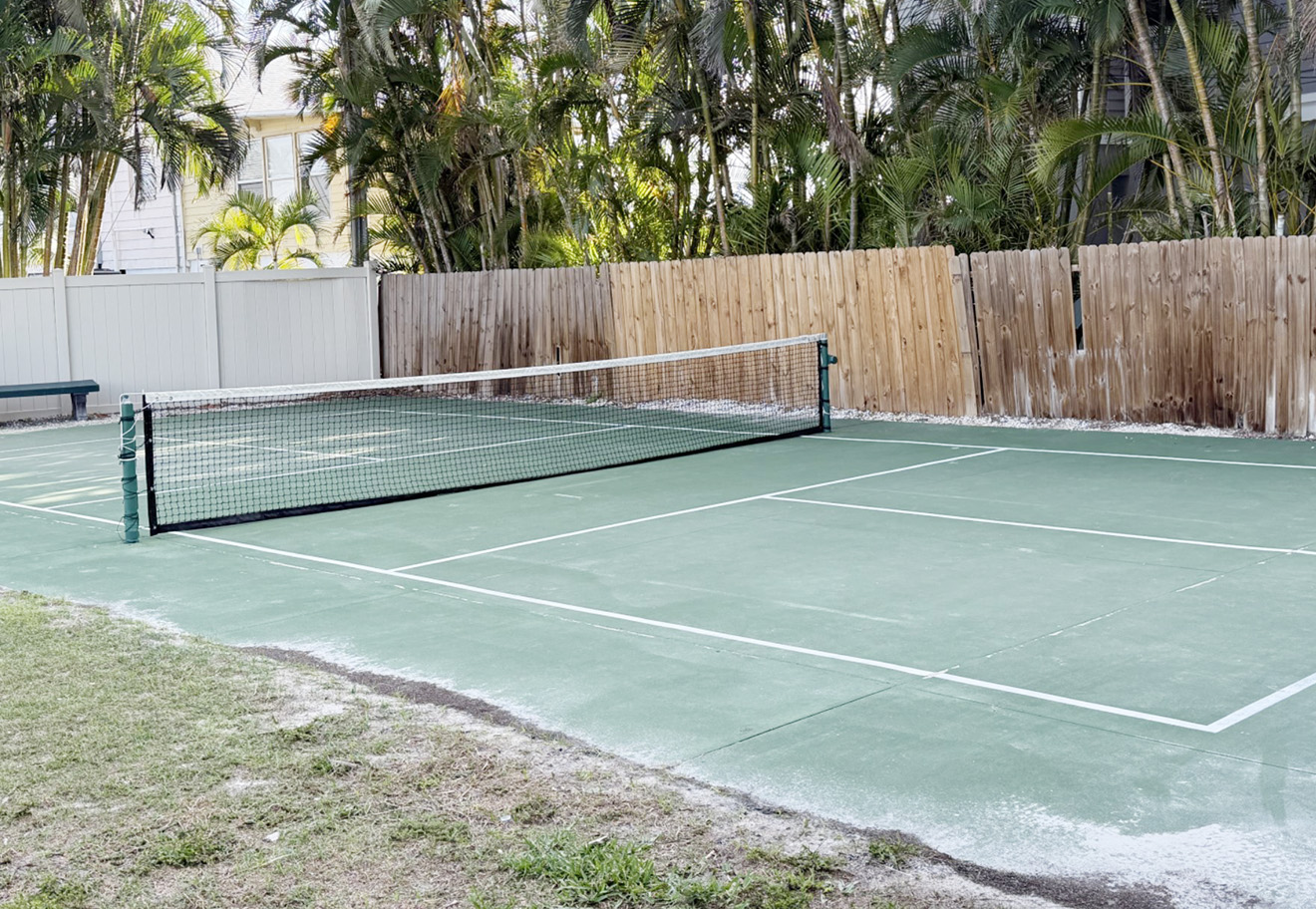
A regulation pickleball court measures 20 feet wide by 44 feet long for the playing area, though you’ll want a bit of buffer on all sides for safe play. A standard tennis court, by comparison, is nearly three times larger. What this means in practice is that a park with existing tennis infrastructure, or even just a paved multipurpose area, can often support two or four pickleball courts without tearing anything down or acquiring new land.
Across the U.S., municipalities, parks, and recreation centers have been increasingly investing in dedicated pickleball courts, often converting underused tennis or basketball courts to meet demand. That’s not just a national trend. It’s a practical solution that lets local facilities add a high-demand activity without a massive capital outlay.
The Learning Curve Is Actually an Asset
Think about how many times a parks program has launched a new sport only to see sign-ups drop off after the first few sessions. New participants feel overwhelmed, they don’t improve fast enough to feel the fun, and they quietly stop coming back.
Pickleball largely avoids this problem. The underhand serve is easy to learn. The non-volley zone, the kitchen, keeps the game from becoming too physically demanding early on. Most beginners can have a genuinely fun rally within the first session, which is a bigger deal for participant retention than it sounds.
Research on pickleball and community participation has found that the sport’s environment makes it one of the more accessible social sports for participants of all ages and for people with mobility limitations who might otherwise be left out of competitive or social sports. For recreation programs trying to serve a diverse community, that accessibility is a meaningful practical advantage.
The Health Case Is Stronger Than Most Realize
Parks departments regularly have to justify program investments in terms of public health outcomes. With pickleball, that justification is getting easier.
Research shows recreational pickleball keeps players in the moderate-intensity aerobic zone, meeting American Heart Association guidelines, while also building balance, functional strength, and fine motor coordination. For older adults in particular, those physical benefits stack up quickly with regular play.
But the mental health data is where things get interesting.
A national cross-sectional study of more than 800 Americans over age 50 found that current pickleball players were less likely to report feeling lonely compared to those who had never played. The findings, published in the Journal of Primary Care and Community Health, indicate the sport offers unique opportunities for social connection that other forms of physical activity may not provide.
Medical experts point out that the social benefits of group play are significant because pickleball can foster social interactions during the match and before and after as well, helping older adults create new social bonds or strengthen their existing social network. For a recreation program serving a population where isolation is a real concern, that’s not a small thing.
So the sport isn’t just popular. It’s doing measurable good in the communities where it takes root.
Cross-Generational Appeal That Actually Holds Up
Most recreation programs end up siloed by age. The senior fitness class runs Tuesday mornings. Youth basketball is Saturday afternoons. The programs rarely mix.
Pickleball is genuinely different in this respect. The average age of pickleball players has dropped to 34.8 years, with 70% of participants aged between 18 and 44. And yet the sport maintains a strong presence among older adults who’ve played for years. You can walk up to an open-play session at a public park and find a 28-year-old playing doubles with a 65-year-old without either of them feeling out of place.
That’s rare. And for parks departments trying to build programming that serves the whole community rather than specific demographic silos, it’s worth a lot.
How Cities Are Responding
It’s not just individual parks making moves. Seattle Parks and Recreation formally established sport-specific hubs, designating Green Lake Park as a dedicated pickleball hub and committing to expanded court infrastructure across the city based on a multi-year planning process that included community surveys and commission recommendations.
The Los Angeles Department of Recreation and Parks has committed to expanding pickleball opportunities through a balanced approach that includes identifying underused tennis courts for conversion, promoting the sport through local ambassadors, offering instruction for all skill levels, and hosting tournaments to build community engagement.
And in Fort Collins, Colorado, the city’s Parks and Recreation Master Plan formally identified the need for additional dedicated pickleball courts to provide equitable access and meet desired service levels through 2040, with a feasibility study underway for a twelve-court complex at a community park.
These aren’t small towns experimenting with a trend. These are major municipalities making formal, long-term commitments. That signals something important about where public recreation investment is heading.
Getting the Equipment Right
Courts without quality equipment aren’t courts. They’re just painted surfaces.
For public parks programs and recreation centers, equipment sourcing tends to fall into one of two categories: buying consumer retail gear one piece at a time, or working with a wholesale supplier to stock a full inventory at lower per-unit cost. In most cases, any facility running regular programming is better served by the wholesale route.
PicklePro Shop, a Florida-based brand that designs and quality-controls its products locally, makes gear specifically built to hold up under regular use. Their MAX and PKLE paddles use T700 carbon fiber faces and thermoformed unibody construction, which resists delamination under the kind of repeated handling that comes with community programs where equipment rotates through dozens of hands per week. Every paddle comes with a fitted protective cover included, which extends product life in settings where gear gets tossed in a bin between sessions.
For beginner-oriented programming, their Junior line offers lighter paddles with friendlier sweet spots, which helps new players make contact consistently and builds enough early confidence to keep them coming back.
Why Wholesale Makes Sense for Recreation Programs
When you’re running organized open play, leagues, or learn-to-play clinics, equipment costs are ongoing, not one-time. Balls wear out. Paddle grips degrade. And gear disappears. Buying retail every time you need to replenish is expensive and logistically annoying.
Wholesale pickleball equipment lets rec departments and parks programs buy in volume at better per-unit pricing, with consolidated shipping that reduces freight overhead. For facilities that are managing tight budgets and trying to get the most out of every program dollar, that operational efficiency matters.
PicklePro Shop has been building out its wholesale reach specifically toward community facilities, schools, and recreation programs, including those in Latin America and the Caribbean where resort and park infrastructure is expanding to meet growing demand from both local and visiting players.
Starting Small Is Fine
Not every parks department can commit to a twelve-court complex from the start. And that’s fine. Pickleball’s infrastructure doesn’t require that kind of investment to get going.
Two permanent courts, a quality set of nets, a rack of paddles for a lending program, and a scheduled open-play block a few times a week is enough to build a community around the sport. The social dynamics of pickleball tend to take over from there. Players bring friends. Friends show up the next week. A regular group forms. Before long, you’ve got a program that runs largely on its own momentum.
The communities that moved early on pickleball infrastructure are already seeing those results. The ones still deciding are the ones their residents are driving past to get to a neighboring city’s courts.
FAQ
Why is pickleball a good fit for community parks?
Pickleball fits community parks well because it requires relatively small courts, has a short learning curve that makes it accessible to beginners, appeals to a wide age range, and builds strong social connection among players. Public parks can often add multiple pickleball courts by converting underused tennis or basketball surfaces without major construction.
What are the health benefits of pickleball for community recreation programs?
Research shows pickleball provides moderate-intensity aerobic exercise that meets American Heart Association physical activity guidelines, while also improving balance and coordination. Studies have found associations between pickleball participation and lower rates of loneliness, reduced depression, and improved life satisfaction, particularly among adults over 50.
How many pickleball courts can fit on a tennis court?
A standard tennis court can typically fit two pickleball courts side by side. This makes tennis court conversions one of the most cost-effective ways for parks and recreation facilities to add pickleball capacity without requiring new land or extensive construction.
What equipment do community parks need to offer pickleball?
At minimum, a parks program needs regulation nets, paddles in a range of weights and skill levels for borrowing, and outdoor-rated pickleballs. Protective covers for paddles extend equipment life in high-rotation community settings. Many parks also add basic benches and windscreens as the program grows.
How do recreation facilities source pickleball equipment in bulk?
Facilities typically source pickleball gear through wholesale suppliers that offer volume pricing on paddles, balls, nets, and accessories. Buying in bulk reduces the per-unit cost and consolidates shipping into fewer orders, which cuts freight costs. U.S.-based wholesale suppliers can generally offer shorter lead times and simpler logistics than sourcing from overseas.
Are cities investing in dedicated pickleball facilities?
Yes. Cities including Seattle, Los Angeles, Fort Collins, and Carlsbad have formally committed to dedicated pickleball court infrastructure through their parks and recreation master plans. This kind of institutional adoption reflects the sport’s broad community demand and long-term staying power as a public recreation amenity.
How do parks programs keep pickleball equipment from wearing out too quickly?
Buying quality paddles with durable construction, such as thermoformed unibody frames and carbon fiber faces, significantly extends equipment life compared to lower-cost alternatives. Using fitted protective covers between sessions reduces surface damage. Establishing a regular inventory check and bulk reorder process through a wholesale supplier helps programs stay ahead of replacement needs without disruptive gaps in availability.